
A deviated nasal septum does not always need surgery. Septoplasty is usually considered when a bent nasal septum is causing persistent nasal blockage, especially one-sided blockage, and symptoms continue despite appropriate medical treatment for allergy, sinusitis or turbinate swelling. Medicines can reduce swelling inside the nose, but they cannot straighten a significantly bent septum.
Medicines can reduce swelling inside the nose, but they cannot straighten a significantly bent septum. If nasal blockage is affecting sleep, exercise, daily comfort, snoring, sinus drainage or quality of life, an ENT evaluation can help decide whether septoplasty is likely to help.
What is a deviated nasal septum?
The nasal septum is the partition that divides the nose into right and left sides. It is made of cartilage in the front and bone further back. Ideally, it should sit close to the centre so that air can pass comfortably through both sides of the nose.
A deviated nasal septum, often called DNS, means this partition is bent or shifted to one side. Many people have some degree of septal deviation. A mild deviation may cause no symptoms. The problem becomes important when the bend narrows the nasal airway or contributes to persistent blockage.
Common symptoms of a deviated septum
Patients with a significant deviated septum often describe nasal blockage that feels different from a routine cold or allergy. The blockage may be present most days and may be worse on one side.
- Blocked nose on one side
- Difficulty breathing through the nose during sleep or exercise
- Mouth breathing, especially at night
- Snoring or disturbed sleep
- Dry mouth or dry throat on waking
- Frequent need to sleep on one particular side
- Recurrent nasal congestion despite allergy medicines
- Sinus pressure or repeated sinus infections in selected patients
- Nose blockage that becomes more noticeable during colds or allergy flares
A deviated septum can also coexist with nasal allergy, turbinate swelling or sinusitis. This is why a proper ENT examination is important before deciding on treatment.
Is every blocked nose due to DNS?
No. This is a very common misunderstanding.
A blocked nose may be due to allergy, sinusitis, turbinate enlargement, AC-related dryness, nasal polyps, adenoid enlargement in children, reflux-related throat symptoms, or a combination of factors. Some patients are told they have DNS on a scan or during a routine check, but the septum may not be the main reason for their symptoms.
The key question is not simply whether the septum is bent. The important question is whether the bend is significant enough to explain the patient’s symptoms.
When can medicines help?
Medicines can help when nasal blockage is mainly due to swelling rather than fixed structural narrowing. For example, allergy and turbinate swelling may improve with correct medical treatment.
Depending on the diagnosis, treatment may include saline nasal care, allergy control, antihistamines, nasal steroid sprays, dust and AC trigger control, and treatment of sinus infection only when clinically indicated.
However, medicines cannot straighten a bent septum. If the septum itself is causing a fixed obstruction, medicines may give only partial or temporary relief.
When is septoplasty considered?
Septoplasty is a surgery done to straighten the deviated nasal septum and improve nasal airflow. It is usually considered when symptoms are persistent, bothersome and clearly related to septal deviation.
An ENT doctor may discuss septoplasty if you have:
- Persistent one-sided nasal blockage
- Nasal obstruction that has not improved adequately with appropriate medicines
- Difficulty breathing through the nose during sleep or exercise
- Mouth breathing or snoring related to nasal obstruction
- Recurrent sinus symptoms where septal deviation is contributing to poor drainage
- Significant septal deviation seen on clinical examination or nasal endoscopy
- Need for better nasal access during sinus surgery in selected cases
The decision is individual. Surgery is not advised just because a deviation exists. It is advised when symptoms, examination findings and patient goals match.
What happens during ENT evaluation for DNS?
During consultation, your ENT doctor will ask about the pattern of blockage, which side is worse, whether symptoms change with allergy medicines, whether there is snoring, mouth breathing, sinus pressure or recurrent infections, and what treatment you have already tried.
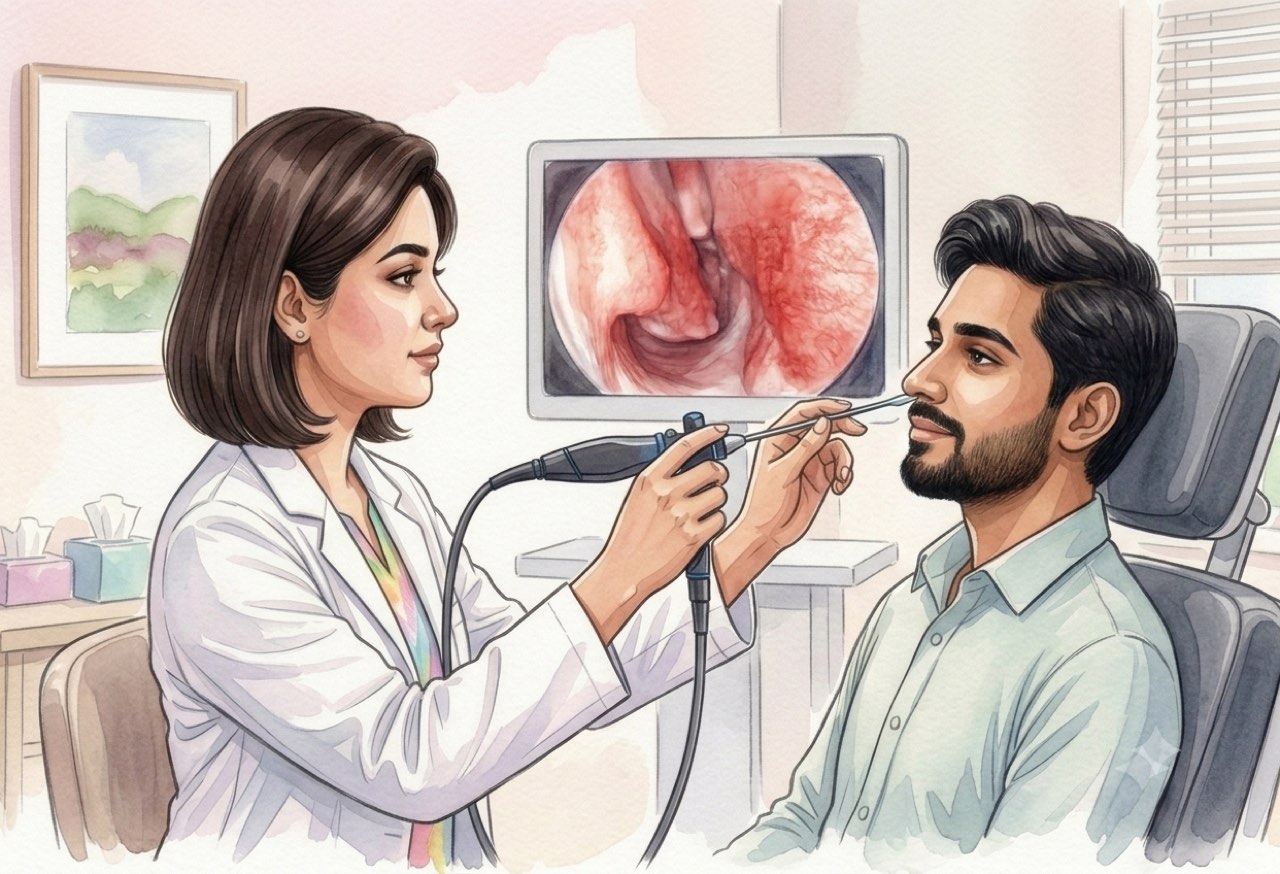
Examination may include anterior rhinoscopy and nasal endoscopy. Nasal endoscopy is a brief in-clinic procedure using a thin camera to examine the inside of the nose. It helps assess the septum, turbinates, nasal polyps, discharge, sinus drainage areas and the back of the nose.
A CT scan is not required for every patient with DNS. It may be advised if sinusitis, polyps, complex anatomy or surgical planning needs further assessment.
What does septoplasty involve?
Septoplasty is usually done through the inside of the nose, so there is generally no external scar. The aim is to reposition or remove the obstructing bent portions of cartilage or bone while preserving support for the nose.
In some patients, septoplasty may be combined with turbinate reduction if turbinate enlargement is also contributing to obstruction. If chronic sinusitis or nasal polyps are present, sinus surgery may be planned separately or along with septoplasty depending on the findings.
Septoplasty is a functional surgery. Its main goal is to improve nasal breathing. It is different from cosmetic rhinoplasty, which changes the external appearance of the nose. In some selected patients, both functional and external nasal concerns may need to be discussed together.
What improvement can you expect?
The most expected benefit of septoplasty is improved nasal airflow on the blocked side. Some patients also notice better sleep comfort, less mouth breathing and reduced dryness on waking if nasal obstruction was the main cause.
However, septoplasty does not cure allergy. If allergy, sinus inflammation, reflux, weight-related snoring or sleep apnoea are also present, those conditions may still need separate treatment. This is why pre-operative counselling matters.
When should you not rush into septoplasty?
Septoplasty may not be the first step if symptoms are mild, recent, clearly seasonal, mainly allergy-related, or responding well to medicines. It may also not solve symptoms that are mainly due to uncontrolled allergic rhinitis, chronic sinus inflammation, reflux or sleep apnoea.
A careful evaluation helps avoid both extremes: ignoring a significant structural blockage for years, or doing surgery for a septal deviation that is not actually causing the patient’s main complaint.
When should you see an ENT doctor?
Consider an ENT evaluation if you have
- Blocked nose on one side for several weeks or months
- Nasal blockage affecting sleep, work, exercise or daily comfort
- Snoring, mouth breathing or dry throat on waking
- Repeated use of nasal decongestant drops
- Recurrent sinus pressure or infections
- Reduced smell, facial pain or thick nasal discharge
- History of nasal injury followed by breathing difficulty
- Persistent symptoms despite allergy or sinus treatment
Early evaluation does not mean you will definitely need surgery. It means the cause of obstruction can be identified properly.
ENT consultation for deviated septum in T. Nagar, Chennai
If you have persistent blocked nose, one-sided nasal obstruction, mouth breathing, snoring or sinus symptoms, an ENT evaluation can help determine whether the cause is deviated septum, turbinate swelling, allergy, sinusitis or a combination of factors.
Dr Urvashi Singh is a Consultant ENT Surgeon based in T. Nagar, Chennai. The clinic offers evaluation of nasal obstruction, nasal allergy, sinusitis, turbinate swelling and septal deviation, with nasal endoscopy and further investigations recommended only when clinically indicated.
Book an ENT consultation with Dr Urvashi Singh in T. Nagar, Chennai for assessment of persistent blocked nose or suspected deviated nasal septum.
Related Reading
Frequently asked questions
Does every deviated septum need surgery?
Can medicines cure a deviated nasal septum?
How do I know if my blocked nose is due to DNS or allergy?
Will septoplasty stop snoring?
Is a CT scan always needed before septoplasty?
Book your appointment today.
Visit Dr Urvashi Singh in T. Nagar, Chennai for ENT care for adults and children. The clinic team responds on WhatsApp within a few hours.