
Can Air-Conditioning Cause Blocked Nose and Throat Dryness?
In Chennai, AC-related nose and throat symptoms are very common during summer. Many patients say their nose blocks at night, they wake up with a dry throat, or they start sneezing as soon as they enter an air-conditioned room. These symptoms may look simple, but the cause is not always the same.
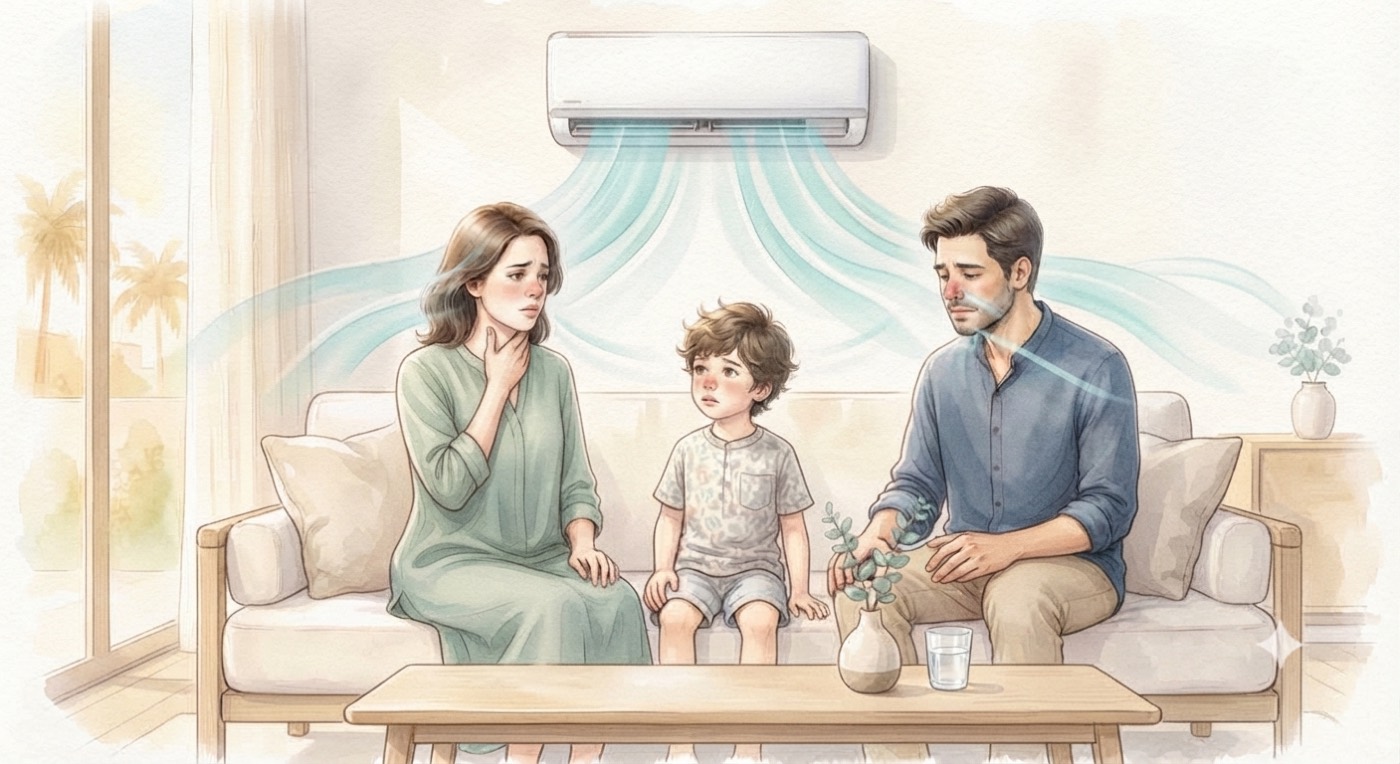
Yes. Air-conditioning can contribute to blocked nose, throat dryness, dry cough and sneezing. AC itself does not directly cause infection, but prolonged exposure to cold dry air can irritate and dry the lining of the nose and throat. If the airflow is directed towards the face, especially while sleeping, the dryness can be more noticeable. Poorly cleaned AC filters may also circulate dust, mould and indoor allergens, which can worsen nasal allergy and sinus symptoms. If your symptoms are persistent, recurring, affecting sleep, or associated with sinus pressure, ear blockage, reduced smell or snoring, an ENT evaluation is advisable.
For some people, the problem is mainly dryness from AC exposure. For others, AC unmasks an underlying nasal allergy, turbinate swelling, deviated nasal septum, sinusitis, reflux or snoring-related mouth breathing. This article is part of a wider guide to blocked nose, sneezing and throat dryness in Chennai summer.
Why AC-Related ENT Symptoms Are Common in Chennai
Chennai summer usually means long hours in air-conditioned rooms, cars, offices, clinics, schools, shops and malls. The nose and throat are repeatedly exposed to outdoor heat and humid air, followed by cold indoor air. This rapid change can irritate the lining of the nose and throat.
The nose normally warms, filters and humidifies the air we breathe. When the air is cold and dry, the nasal lining can become irritated. In response, it may swell, produce more mucus or become more sensitive to dust and allergens.
That is why AC-related symptoms are often worse indoors, at night, or first thing in the morning.
How Air-Conditioning Affects the Nose
Cold dry AC air can dry the nasal lining. In some patients, this produces a burning or dry sensation. In others, the nose reacts by swelling internally, making the nose feel blocked even when there is no infection.
Common nasal symptoms linked to AC exposure include:
- Blocked nose, especially at night
- Repeated sneezing in AC rooms
- Nasal dryness or burning
- Watery nasal discharge
- Postnasal drip
- Throat clearing
- Feeling of congestion without fever
If symptoms happen only in air-conditioned rooms and improve after leaving that environment, AC-related irritation may be contributing. But if the nose remains blocked even outside AC exposure, another nasal condition should be considered.
Why AC Can Cause Throat Dryness
Throat dryness is especially common after sleeping in an air-conditioned room. The problem may be due to direct drying of the throat, but very often the root cause is actually the nose.
When the nose is blocked during sleep, the person starts breathing through the mouth. Mouth breathing dries the throat. If this happens in an AC room, the dryness may become worse.
Morning throat dryness may be related to:
- Nasal blockage causing mouth breathing
- Direct AC airflow towards the face
- Snoring or disturbed sleep
- Postnasal drip irritating the throat
- Reflux in some patients
- Low fluid intake during hot weather
So a dry throat every morning should not always be treated as only a throat problem. If it is frequent, the nose, throat and sleep pattern may all need to be assessed.
Can AC Cause Sneezing?
Yes, AC exposure can trigger sneezing in some patients. This may happen due to sudden temperature change, cold air sensitivity, dryness, dust from filters, mould, or underlying nasal allergy.
A useful clue is itching. If sneezing is associated with an itchy nose, itchy eyes and watery discharge, nasal allergy is more likely. If it is mainly dryness, burning and throat irritation after AC exposure, irritation may be the bigger factor.
Can AC Cause Sinusitis?
AC itself does not directly cause a sinus infection. However, it can worsen nasal dryness and allergy symptoms. When the nasal lining becomes swollen, sinus drainage may be affected. In susceptible patients, this can contribute to sinus pressure, heaviness, headache or postnasal drip.
Sinusitis is more likely if there is thick or discoloured nasal discharge, facial pain or pressure, reduced smell, fever, or symptoms that persist beyond 7 to 10 days. Not every sinus-like symptom needs antibiotics, and repeated self-medication can delay the correct diagnosis.
Why AC Filters Matter
AC filters can collect dust, mould and indoor allergens. If they are not cleaned regularly, these particles may circulate in the room and irritate the nose and throat.
This is especially important for bedrooms and workspaces where people spend many hours every day. Regular filter cleaning may reduce sneezing, blocked nose, dry cough and allergy symptoms in people who are sensitive to indoor triggers.
What You Can Try at Home First
If symptoms are mild and clearly linked to AC exposure, these simple steps may help:
- Avoid direct AC airflow on the face
- Keep the AC temperature moderate instead of very cold
- Clean AC filters regularly
- Stay well hydrated through the day
- Use saline nasal spray if the nose feels dry
- Avoid sleeping directly under the AC vent
- Reduce dust in the bedroom
- Avoid strong room fresheners, incense smoke and perfumes
- Do not overuse decongestant nasal drops
If symptoms settle with these measures and do not recur, the issue may have been mainly environmental irritation.
When It May Not Be Just AC
AC may be only one part of the problem. You should consider an ENT evaluation if you notice any of the following:
Seek an ENT evaluation if you notice any of the following
- Nasal blockage that persists even outside AC exposure
- Symptoms lasting more than 7 to 10 days
- Frequent recurrence of blocked nose or sneezing
- One-sided nasal blockage
- Facial pain, pressure or heaviness
- Reduced or lost sense of smell
- Ear fullness, popping or muffled hearing
- Snoring, gasping or disturbed sleep
- Persistent throat clearing or dry cough
These symptoms do not always mean something serious, but they do need proper assessment rather than repeated courses of over-the-counter medication.
How an ENT Doctor Evaluates AC-Related Symptoms
An ENT evaluation helps determine whether your symptoms are due to AC-related dryness alone or whether there is an underlying nasal or throat condition.
Your doctor may assess your symptom pattern, AC exposure, allergy triggers, nasal blockage, throat symptoms, snoring, ear fullness and previous medicines used. A nose, throat and ear examination is done. If symptoms are persistent or recurring, nasal endoscopy, a brief in-clinic procedure using a thin camera to examine the inside of the nose, may be recommended.
This can help identify nasal swelling, turbinate enlargement, deviated nasal septum, polyps, discharge, postnasal drip or sinus drainage problems. A CT scan is usually advised only when clinically indicated.
ENT Consultation in T. Nagar, Chennai
If your blocked nose, throat dryness, sneezing or dry cough worsens in air-conditioned environments, an ENT consultation can help identify whether the cause is AC irritation, nasal allergy, sinusitis, nasal obstruction, reflux or sleep-related mouth breathing.
Dr Urvashi Singh is a Consultant ENT Surgeon based in T. Nagar, Chennai. The clinic evaluates adults and children with blocked nose, sneezing, sinus pressure, throat dryness, ear blockage, snoring and related ENT symptoms.
Book an ENT consultation with Dr Urvashi Singh in T. Nagar, Chennai for persistent or recurring AC-related nose and throat symptoms.
Related Reading
Frequently asked questions
Can sleeping in AC cause throat dryness?
Why does my nose block in AC?
Can AC cause dry cough?
Can AC cause sinusitis?
Should I stop using AC completely?
When should I see an ENT doctor for AC-related symptoms?
Book your appointment today.
Visit Dr Urvashi Singh in T. Nagar, Chennai for ENT care for adults and children. The clinic team responds on WhatsApp within a few hours.