
Allergy, Sinusitis or AC Irritation: How to Tell the Difference
Repeated sneezing, sinus pressure and a dry throat can all start the same way. Telling them apart is what decides whether you need an antihistamine, a proper sinus assessment, or simply to move your bed away from the AC vent.
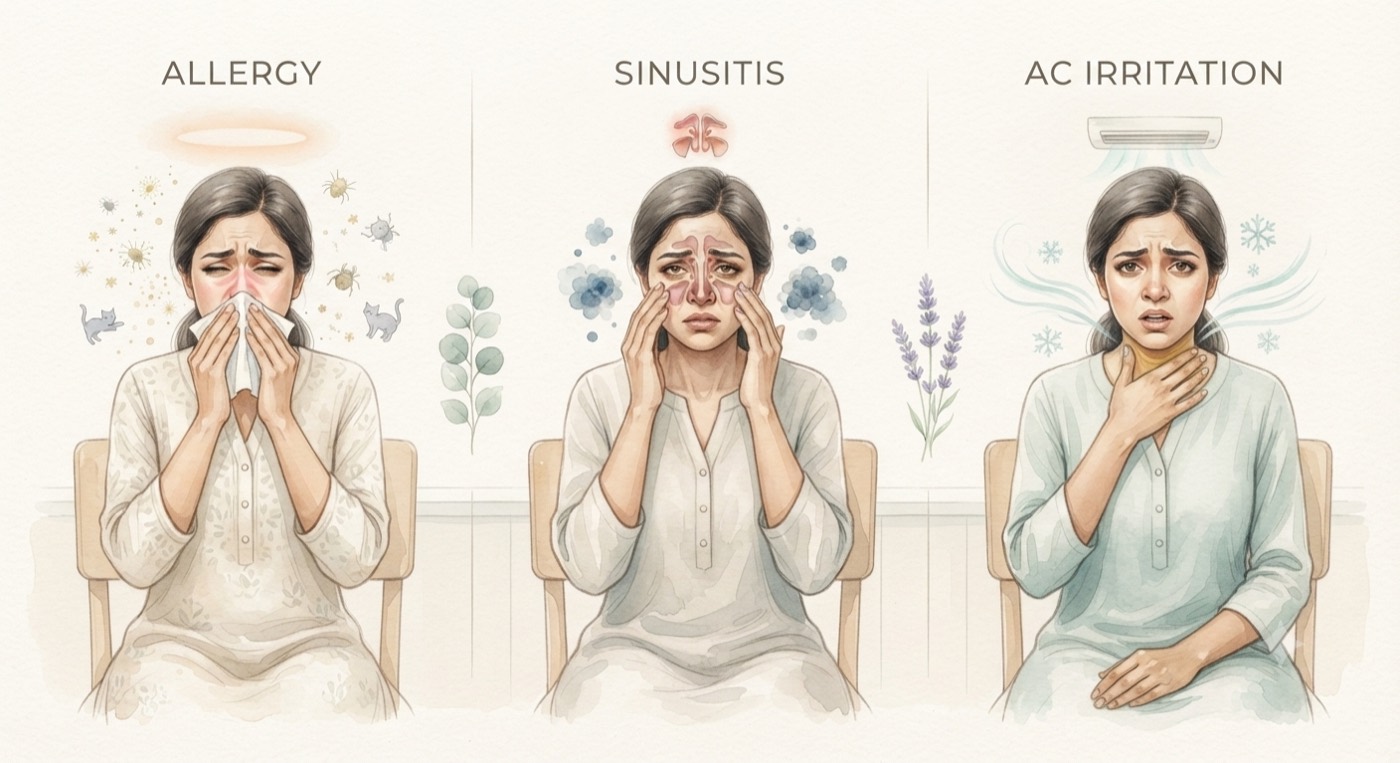
Repeated sneezing, itchy nose or eyes and watery nasal discharge usually point towards nasal allergy. Thick nasal discharge, facial pressure, headache or reduced smell may suggest sinusitis. Dry throat, dry cough or irritation that is clearly worse in an air-conditioned room may be due to AC-related dryness or irritation. In real life these problems often overlap. If symptoms are persistent, recurring, one-sided, affecting sleep, or not improving with usual medication, an ENT consultation can help identify the actual cause.
Blocked nose and sneezing are common complaints in Chennai, especially during hot and humid months when people spend long hours in air-conditioned rooms. But the cause is not always the same. This article is a companion to the wider guide on blocked nose, sneezing and throat dryness in Chennai summer.
Why This Difference Matters
Some patients keep taking allergy tablets when the actual issue is sinusitis. Some take repeated antibiotics for a problem that is mainly allergy or nasal inflammation. Others blame the AC, when there is an underlying deviated nasal septum, turbinate swelling or sinus problem that needs proper assessment.
The treatment changes depending on the cause. That is why recognising the symptom pattern is useful. It is not meant to replace a clinical examination, but it can help you know when to stop self-medicating and get checked.
Quick Symptom Guide
| Symptom pattern | More likely cause |
|---|---|
| Repeated sneezing, itchy nose or eyes, clear watery discharge | Nasal allergy |
| Thick or discoloured nasal discharge, facial pain or pressure, reduced smell | Sinusitis |
| Dry throat, dry cough, nose or throat irritation after AC exposure | AC-related dryness or irritation |
| Nasal block mainly at night, mouth breathing, snoring or disturbed sleep | Allergy, turbinate swelling, deviated septum or sleep-related airway issue |
| Ear fullness, popping or muffled hearing along with nasal symptoms | Eustachian tube dysfunction related to nasal inflammation |
| One-sided persistent nasal blockage, bleeding or worsening facial pain | Needs ENT evaluation |
This table is only a guide. A proper ENT examination is important when symptoms are persistent, recurring or unusual.
What Nasal Allergy Usually Feels Like
Nasal allergy, also called allergic rhinitis, usually causes an irritation pattern rather than an infection pattern. The typical symptoms are repeated sneezing, itchy nose, itchy or watery eyes, clear watery discharge, blocked nose and postnasal drip.
Many patients notice that symptoms worsen after dust exposure, cleaning, travel, weather change, or when they enter an air-conditioned room. The symptoms may come and go, and the nasal blockage may alternate from one side to the other.
A useful clue is itching. If the nose or eyes are itchy and the discharge is watery, allergy is more likely than sinus infection. Allergy can also cause throat clearing and ear fullness because the nose, throat and ears are closely connected.
What Sinusitis Usually Feels Like
Sinusitis is more likely when the symptoms include thick nasal discharge, facial pressure, heaviness around the cheeks or forehead, headache, reduced smell, postnasal drip or blocked nose lasting more than 7 to 10 days.
Some patients feel worse after initially improving from a cold. Others have repeated episodes over a few months. Fever may be present, but it is not compulsory for sinusitis.
Not every headache is sinusitis, and not every sinus symptom needs antibiotics. Allergy, nasal swelling, migraine, eye strain and structural nasal blockage can all mimic or contribute to sinus-like symptoms.
What AC Irritation Usually Feels Like
Air-conditioning does not directly cause infection. However, prolonged exposure to cold dry air can dry and irritate the lining of the nose and throat. This is common in Chennai because many people move repeatedly between outdoor heat and indoor AC.
AC-related irritation often presents as dry throat, dry cough, nasal dryness, burning sensation in the nose, sneezing in AC rooms, or symptoms that improve when you leave the air-conditioned environment.
Poorly cleaned AC filters can also circulate dust, mould and indoor allergens. In people who already have nasal allergy, this can worsen sneezing and congestion.
Can More Than One Cause Be Present?
Yes. This is very common.
For example, nasal allergy can cause swelling inside the nose. That swelling can affect sinus drainage and cause facial pressure or postnasal drip. If the same person sleeps in AC, they may also wake up with throat dryness because of mouth breathing.
So the real diagnosis is not always one simple label. It may be allergy with sinus inflammation, AC irritation on top of allergy, or nasal obstruction that becomes more noticeable at night.
What You Can Try First If Symptoms Are Mild
If symptoms are mild and recent, simple steps may help. Avoid direct AC airflow on the face, keep the AC temperature moderate, clean AC filters regularly, stay hydrated, reduce dust exposure and use saline nasal spray if the nose feels dry.
Avoid overusing decongestant nasal drops. They may give quick relief, but repeated use can worsen nasal blockage over time. Antibiotics should not be started without medical advice, because many blocked nose and sinus-like symptoms are not bacterial infections.
When Should You See an ENT Doctor?
Consider an ENT evaluation if you notice any of the following
- Symptoms lasting more than 7 to 10 days
- Symptoms that keep recurring
- Symptoms affecting your sleep
- Nasal blockage mainly on one side
- Facial pain or reduced sense of smell
- Ear blockage alongside nasal symptoms
- Blood-stained nasal discharge
- Snoring or repeated throat clearing
You should also get assessed if antihistamines, decongestants or repeated cold medicines are giving only temporary relief. This may mean that the underlying cause has not been identified.
How an ENT Evaluation Helps
An ENT consultation looks beyond the symptom of blocked nose. Your doctor will ask about the pattern of symptoms, triggers, allergy history, AC exposure, sleep quality, previous medication use and associated ear or throat complaints.
The nose, throat and ears are examined. If symptoms are persistent or recurring, nasal endoscopy, a brief in-clinic procedure using a thin camera to examine the inside of the nose, may be recommended. This can help identify turbinate swelling, deviated septum, nasal polyps, pus, postnasal drip, sinus drainage issues or other causes of obstruction.
A CT scan is not needed for every patient. It is usually advised only when sinus disease is suspected, symptoms are recurrent, or surgery is being considered.
ENT Consultation in T. Nagar, Chennai
If you are unsure whether your blocked nose, sneezing, sinus pressure, throat dryness or ear fullness is due to allergy, sinusitis or AC irritation, an ENT evaluation can help clarify the cause and guide treatment.
Dr Urvashi Singh is a Consultant ENT Surgeon based in T. Nagar, Chennai. Patients from T. Nagar, Pondy Bazaar, Nungambakkam, Alwarpet, Mylapore and nearby areas visit for evaluation of persistent and recurring nasal, sinus, throat and ear symptoms.
Book an ENT consultation with Dr Urvashi Singh in T. Nagar, Chennai for focused evaluation of blocked nose, nasal allergy, sinus symptoms, AC-related throat dryness or ear blockage.
Related Reading
Frequently asked questions
How do I know if my blocked nose is allergy or sinusitis?
Is sneezing in AC always allergy?
Can allergy and sinusitis happen together?
Can sinusitis occur without fever?
When should I stop self-medicating and see an ENT?
Book your appointment today.
Visit Dr Urvashi Singh in T. Nagar, Chennai for ENT care for adults and children. The clinic team responds on WhatsApp within a few hours.